
 |
|
Female Genital Mutilation (FGM) |
|
|
|
|
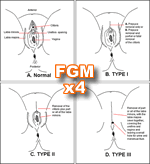
| Whilst FGM gets little coverage in western media, it is a huge deal in parts of Africa in particular. The total number of girls and women who have undergone the four types of FGM - differentiated by which parts of the vagina are cut or closed - has been estimated at anywhere between 100 and 200 million, with above 70% prevalence rates (girls and women aged 15-49) in 12 nations. Most FGM takes place in Africa, away from the global media spotlight, so we generally continue to ignore this barbaric issue. |
|
 |
|
|
|
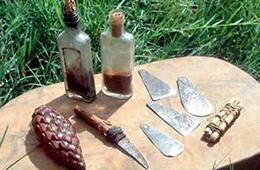
Often called Female Genital Cutting (FGC) or Female Circumcision, there are 4 different types of Female Genital Mutilation (FGM), and they all involve taking a blade to a girls/womans vagina and/or sewing parts of the genital opening closed. This is generally done for customary reasons, but not on religious grounds, as we so often hear in the media, because there are no religious scripts prescribing FGM. Nevertheless, practitioners often believe the practice has religious support, and they may also be heavily reliant on the financial income which FGM brings. In many communities, FGM is believed to reduce a woman's libido, and thereby is further believed to help her resist 'illicit' sexual acts. When a vaginal opening is covered or narrowed, the fear of pain of opening it, and the fear that this will be found out, is expected to further discourage 'illicit' sexual intercourse among women with this type of FGM. Along with many commentators, we also believe that FGM is basically used as a means of 'controlling' women. |
|
|
|
|
Mostly carried out before a girl reaches the age of 15, and with no associated medical benefits, FGM can cause severe bleeding, bladder complications, repeat infections, and can also lead to childbirth complications and newborn deaths. Whilst undergoing the procedure many girls/women are not given pain relief, and amongst many communities, they are expected to 'show no pain'. This, adherents say, is one of the coming of age practices which young girls must undertake, and they must do so 'courageously'. The United Nations is expected to begin a massive push across Africa, and throughout the World, in 2011, in an attempt to bring an end to this practice. Waking the World up to FGM's consequences, and publicising it's sheer scope amongst the World's female population, will be a good place to start. |
|
World Health Organisation (WHO) - FGM Factsheet>
FGM Prevalence Across Africa - Map> |
|
|
 |
|
|
|
 |
|
|
|
|
|
|
|
 |
|
|
|
|
| Lots of useful weblinks relating to FGM, including activism websites & organisations, factsheets and publications. Links to some of those who are also actively pushing this cause on Facebook & Twitter are also included. |
|
|
|
|
|
 |
|
 |
|
|
| Short documentary about Mary (aged 14 years) and Alice (who is in her early 20’s) from Kenya. Both are affected by the traditional rite of passage into womanhood: genital cutting. Mary and her community are preparing for her ceremonial cutting, and Alice is studying to be a social worker to work against female genital mutilation. As the first in her community to refuse the practice, Alice has paid a high price for her choice to break with tradition. Alice tells of the different myths she encounters in the community around her, as to why circumcision is practiced. Mary, on the other hand, has no voice. She just goes through the preparations and rituals in silence. |
|
|
|
 |
|
|
| Lubna al-Hussein, a journalist and author from Khartoum, describes the injustices that face the women of today's Sudan. Today, hundreds of thousands of Sudanese women are fired from their jobs for not wearing sufficient clothing; 91% of Sudanese women face female genital mutilation; the government uses rape as a weapon in Darfur and southern Sudan; and northern Sudan is stained by laws that punish child rape with only one month in prison. |
|
|
|
|
|
|